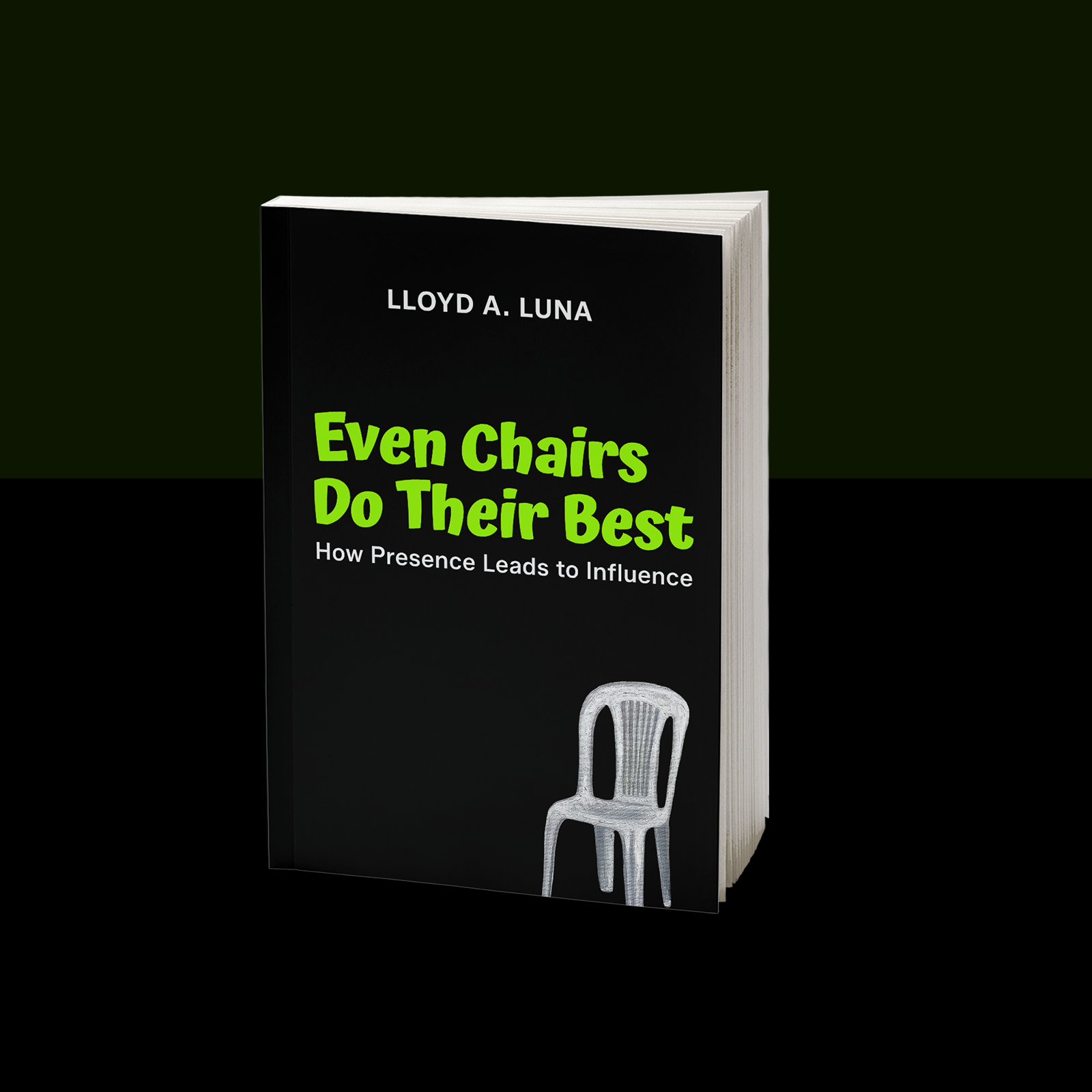
The No-Choice Doctrine is a leadership philosophy popularized by Filipino Executive Presence Speaker and Coach Lloyd Luna in his book, Even Chairs Do Their Best: How Presence Leads to Influence. The doctrine posits that human failure often stems from an abundance of options. In contrast, a chair “succeeds” because it lacks the capacity to choose to be anything else. By intentionally removing the “exits” that lead to mediocrity, you shift from survival by default to purpose by design.
1. The No-Exit Rule
- The Rule: You shall remove the exit to prevent retreat.
- The Principle: Eliminating the option to quit forces a total commitment to success.
- Context: Human nature is wired for comfort; when a task becomes difficult, the brain instinctively searches for a “back door”. By closing these exits—financial cushions, alternative plans, or “just in case” mentalities—you eliminate the friction of indecision. When quitting is no longer an option, your energy is redirected entirely toward forward progress.
2. The Execution Rule
- The Rule: You shall choose a path and walk it until the job is done.
- The Principle: Choose your path with a human heart, then walk it with the “spine of a chair”.
- Context: This rule differentiates the “human heart,” which selects the direction, from the “spine,” which carries the weight. Once committed, you must stop being a “philosopher” who questions the burden and become a “worker” who executes it. This mechanical reliability ensures consistent output regardless of emotional states or external pressures.
3. The Presence Rule
- The Rule: You shall assert your visibility; failing to do so is an abandonment of duty.
- The Principle: A hidden chair provides no value. You must have the courage to be seen.
- Context: In leadership, absence is often interpreted as a lack of authority. To have an impact, you must remain “in the room,” especially in high-pressure environments. Just as a chair in a warehouse serves no purpose, a leader who hides from conflict provides no value. Presence is the foundation of influence.
4. The Alignment Rule
- The Rule: You shall refuse responsibility until you have aligned the work with your capacity.
- The Principle: You only become immovable if the task passes three filters: Competency (skill), Values(philosophy), and Resources (tools to act).
- Context: The “No-Choice” commitment is a heavy burden; you cannot afford to sit in the wrong chair. This requires a ruthless audit before accepting a mandate. Without alignment, you will break under the weight of a task you weren’t designed to carry. True leadership is saying “yes” only to the struggles you are prepared to win.
5. The Purpose Rule
- The Rule: You shall reject passive survival and embrace purpose by design.
- The Principle: If you only do what is required for survival, you are merely “a chair with a pulse”.
- Context: Most people live by “default,” doing just enough to stay alive. This rule demands “design,” where every action is a calculated step toward a specific contribution. To lead, you must accept the resistance that comes with standing for something specific, replacing the safety of the crowd with a singular, functional purpose.
Conclusion: Become Immovable
Leadership is not found in the freedom to wander, but in the power to remain where it matters. If your influence is fading, it is likely because you have left too many doors open behind you.
Stop negotiating with your potential. Perform a “raincheck” today using the Presence Profiles Test to identify the “seat” you were meant to occupy. Burn the ships that allow for retreat and commit to your purpose with the unyielding spine of a chair. The world does not need more people who are merely “surviving”; it needs leaders who have no choice but to succeed.